







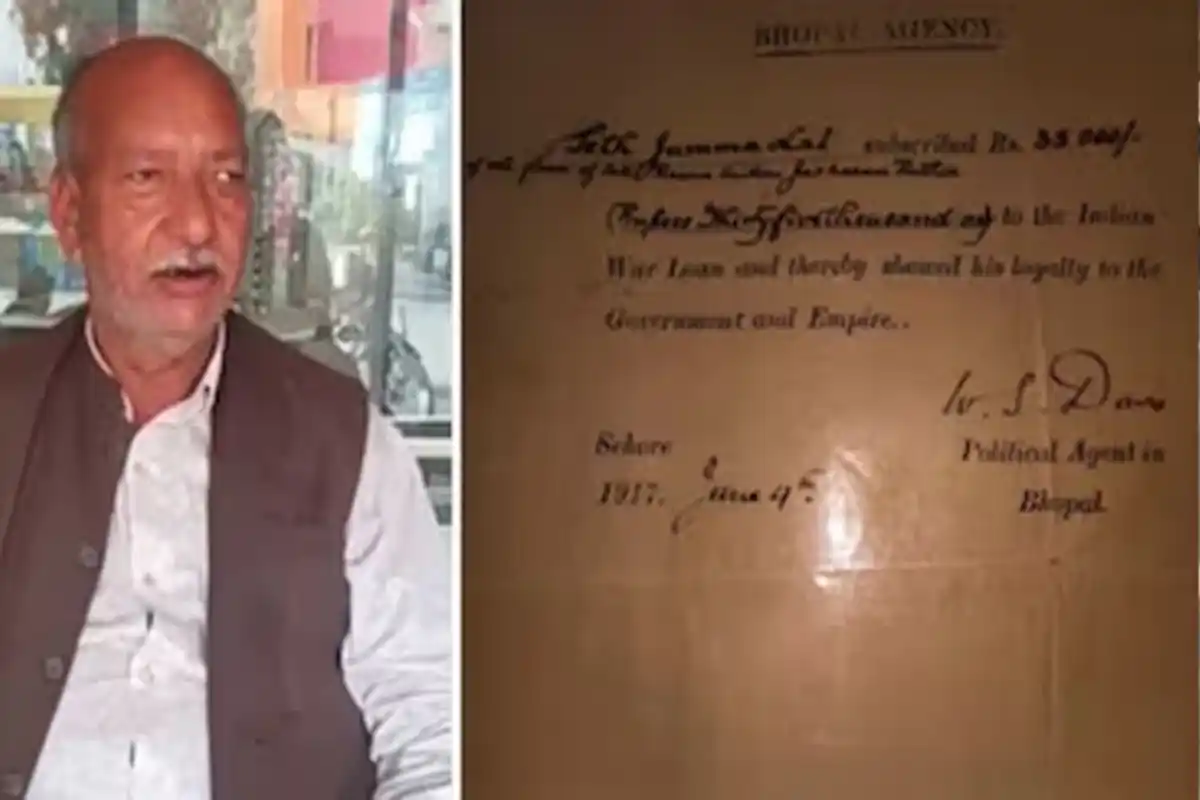
On February 26, 2026, a family in Sehore, Madhya Pradesh, said it plans to seek repayment of a Rs 35,000 loan allegedly given to the British administration in 1917 during World War I.
The family claims the amount was never repaid. Now, more than a century later, they want it back — with interest.
The 1917 War Loan Claim
The loan reportedly supported wartime administration in the princely state of Bhopal during World War I.
A document dated June 4, 1917, states that Seth Jumma Lal “subscribed Rs 35,000 to the Indian War Loan.” It also carries the signature of W.S. Davis, who was the political agent in Bhopal at the time.
War loans were common during that period. The British government issued them to fund military expenses, usually offering 5.5% interest.
How the Document Was Found
Vivek Ruthia, the grandson of Seth Jumma Lal, said the family recently discovered the document among old records after his father’s death.
He now plans to send a legal notice to the British government.
“It’s not just about money, it’s about justice and history,” he said.
The family believes the original amount, when adjusted for compound interest, inflation, or gold value, could now be worth several crores.
Who Was Seth Jumma Lal Ruthia?
Seth Jumma Lal was a well-known trader in cloth and grain in Sehore during British rule.
The Ruthia family was considered affluent in the Bhopal princely state. They owned significant land and business assets.
Even today, the family reportedly owns property in Sehore, Indore, and Bhopal.
Seth Jumma Lal passed away in 1937. The loan issue remained unresolved and eventually faded from public memory.
Can the Claim Succeed?
Legal experts say such cases are rare and complicated.
The transaction happened before India’s Independence. That makes jurisdiction and liability complex issues.
No legal notice has been sent yet. However, the family says it is consulting lawyers and plans to move forward.
Whether the claim stands in court remains uncertain.
Why This Case Matters
The British government loan 1917 claim raises larger questions about historical debts and colonial-era financial transactions.
Even if the case does not succeed legally, it has sparked public curiosity about forgotten financial agreements from the colonial period.
For the Ruthia family, the issue goes beyond money. They say it is about recognition and historical accountability.


