







Israel and Lebanon are heading back to the negotiating table, this time in Rome, with a narrow but consequential goal: turning a fragile framework into an operating security arrangement.
What was confirmed
The State Department confirmed the next round of US-mediated talks will run August 4 to 6 in Rome, after Italian Foreign Minister Antonio Tajani first announced the session. A State Department official told AFP the technical groups will work on expanding the pilot-zone process, resolving border disputes, and building toward a comprehensive peace and security agreement — incremental steps rather than a single breakthrough.
How the framework got here
The talks build on a trilateral agreement signed in Washington on June 26, following war between Israel and Hezbollah that erupted March 2 alongside the broader regional conflict. That deal created a Military Coordination Group, backed by roughly $130 million in combined US humanitarian and military aid, to oversee a phased Israeli withdrawal from two pilot zones as the Lebanese army moves in and verifies Hezbollah’s disarmament.
A familiar obstacle resurfaces
This isn’t the first time Lebanon has promised to disarm Hezbollah in the south. UN Security Council Resolution 1701, adopted after the 2006 Israel-Hezbollah war, called for exactly that south of the Litani River — and was never fully implemented, largely because Beirut lacked the military and political capacity to enforce it. Hezbollah has already rejected the current framework outright, with a senior party figure warning that army enforcement could trigger internal conflict, echoing the same enforcement gap that undercut the 2006 resolution.
Where things stand on the ground
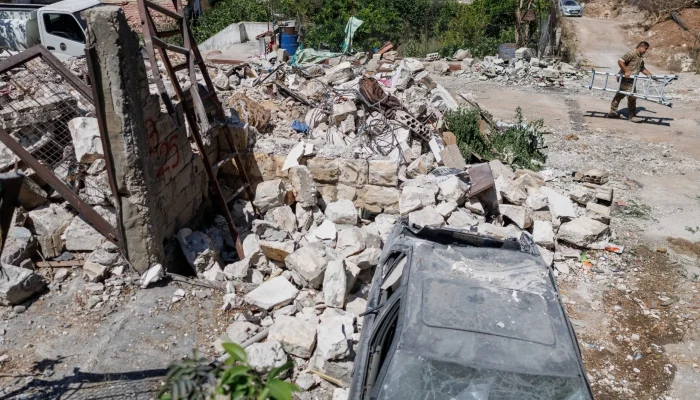
Lebanon’s army condemned continued Israeli military operations in the south on Sunday, arguing they’re blocking its own deployment under the deal — a sign the pilot-zone handover is already straining. Beirut has also reported intermittent Israeli strikes and shelling despite the broader lull in fighting, meaning residents in the affected areas are living with the framework’s promises and its violations simultaneously.
What Rome needs to produce
For the talks to matter, negotiators likely need concrete verification steps — not just rhetoric — on how Hezbollah’s disarmament will be confirmed and how pilot zones expand without reigniting fighting. Given Hezbollah’s flat rejection and the LAF’s limited capacity, expanding the process at all would mark real progress.
Outlook
Rome is unlikely to resolve the core tension between Lebanese sovereignty claims and Hezbollah’s continued armed presence. But if the pilot-zone model survives contact with implementation, it would be a meaningfully different outcome than 1701’s stalled aftermath — the benchmark this framework is quietly being measured against.


