

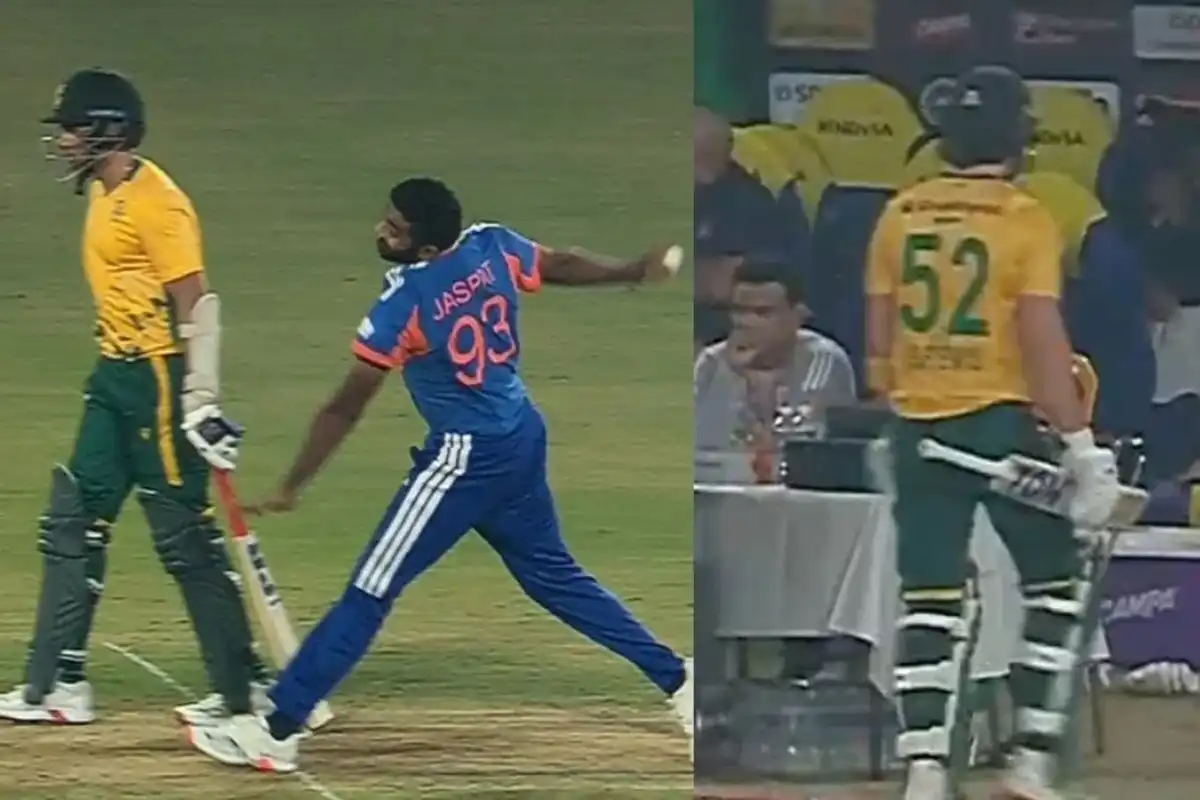
A historic moment for Indian cricket is now clouded in controversy. Star fast bowler Jasprit Bumrah took his 100th T20 International wicket during a match against South Africa in Cuttack. However, replays suggest the wicket should never have counted due to a possible no-ball.
The incident happened during the 11th over of the match. Bumrah bowled to young South African batsman Dewald Brevis. Brevis hit the ball high into the air and was caught out.
But the on-field umpire asked the batsman to wait. The play was sent upstairs to the third umpire for a review. The question was not about the catch, but about Bumrah’s front foot.
The third umpire checked if Bumrah had overstepped the crease, which would make it a no-ball. Television replays appeared to show Bumrah’s entire foot landing well over the white line. Despite this, the third umpire ruled it a legal delivery. The wicket was given, and Brevis had to walk off.
Outrage and Debate Split Cricket World
The decision has caused a major split among fans and experts. Many believe it was a clear and costly error by the officials.
Commentator Pommie Mbangwa voiced his doubt immediately during the broadcast. Looking at the replay, he said, “That looks like a no-ball to me.”
Anger quickly spread on social media. One frustrated fan posted, “That’s was a No ball. Who is that Third umpire? Is he blind? Jasprit Bumrah clearly over stepped. Poor Umpiring.”
The controversy has sparked a bigger debate. Fans and analysts are questioning the accuracy and consistency of the technology used to make these close calls.
A Milestone Achievement Overshadowed
Despite the dispute, the wicket officially marks a massive achievement for Bumrah. He became the first Indian bowler ever to take 100 wickets in all three formats of the game: Test matches, One-Day Internationals, and now T20 Internationals. Worldwide, he is only the fifth bowler to reach this triple milestone.
India won the match decisively by 101 runs. However, the celebration of Bumrah’s personal record and the team’s big victory is being overshadowed. The ongoing debate about the “no-ball blunder” continues to dominate discussions, raising questions about fair play and the role of technology in modern cricket.
