







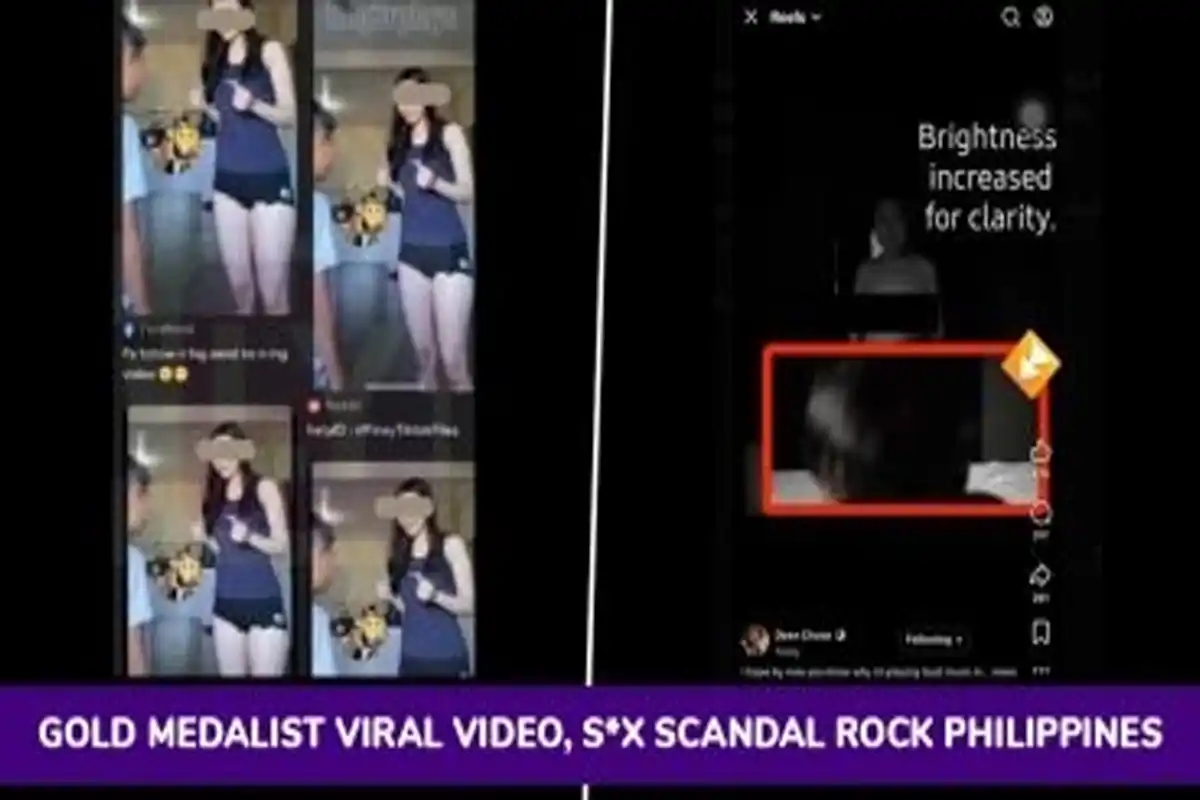
A wave of online controversy has swept across the Philippines in recent days, blending cyber scams with politically charged allegations. From misleading “Gold Medalist Viral Video” links targeting social media users to explosive claims made by vlogger Deen Chase against the country’s top leadership, the digital space has been flooded with confusion, outrage, and misinformation.
Authorities and cybersecurity experts are urging the public to stay alert and verify information carefully, warning that many of these viral trends are either malicious scams or unproven accusations designed to provoke reactions.
The ‘Pinay Gold Medalist Viral Video’ Scam Explained
One of the most widely circulated trends involves posts claiming to show a so-called “Pinay Gold Medalist Viral Video.” These posts are spreading rapidly on platforms like Facebook and Telegram and often include photos of influencer Zyan Cabrera, also known online as Jerriel Cry4zee.
Cybersecurity professionals have confirmed that these posts are part of a phishing campaign. The links do not lead to any real video. Instead, users are redirected to fake login pages or prompted to download harmful software disguised as video players. The scam appears to be timed around global sporting events, using the term “gold medalist” to attract attention and bypass spam filters.
Experts stress that no verified leaked video exists and that the content is purely fabricated to steal personal data and social media accounts.
Deen Chase Allegations Trigger Political Controversy
At the same time, Filipino vlogger Deen Chase has drawn widespread attention for sharing unverified allegations against President Ferdinand “Bongbong” Marcos Jr. and First Lady Liza Araneta-Marcos. Through videos and social media posts, Chase has claimed the existence of explicit photos and videos involving the First Couple.
These claims include accusations of sexual misconduct and drug use. One particularly serious allegation suggests the involvement of a third party. However, no credible evidence, forensic verification, or confirmation from independent institutions has been presented to support these assertions.
Government Response and Legal Warnings
The Philippine government has firmly denied the allegations. Officials from Malacañang have described the claims as deliberate disinformation intended to damage reputations and destabilize public trust. Palace Press Officer Claire Castro stated that legal options are being reviewed in response to what the administration calls malicious online attacks.
Several public figures have also condemned the focus on the First Lady’s private life, calling it a form of gender-based harassment. Authorities have warned that creating or sharing edited or false content could result in serious legal consequences, including cyber libel charges under Philippine law.
A Growing Misinformation Crisis Online
The rise of both the phishing scam and the political allegations highlights a broader issue facing the country’s digital ecosystem. Sensational keywords like “viral video” and “sex scandal” are increasingly being used to manipulate users, spread falsehoods, or exploit curiosity.
Officials and experts advise people to avoid clicking on suspicious links, especially those promising leaked or explicit content. They also recommend relying on established news organisations and verified sources for political information.
As online misinformation becomes more sophisticated, critical thinking and digital awareness remain the strongest tools for users navigating viral content.
Disclaimer:
This article is published by Daily Trend Mirror strictly for informational and educational purposes. We do not host, promote, or link to sexually explicit material, leaked videos, or pirated content. Any references to viral keywords are included only to explain ongoing online trends and associated risks. We strongly discourage searching for or sharing non-consensual or unverified content, as doing so may lead to legal consequences.


