







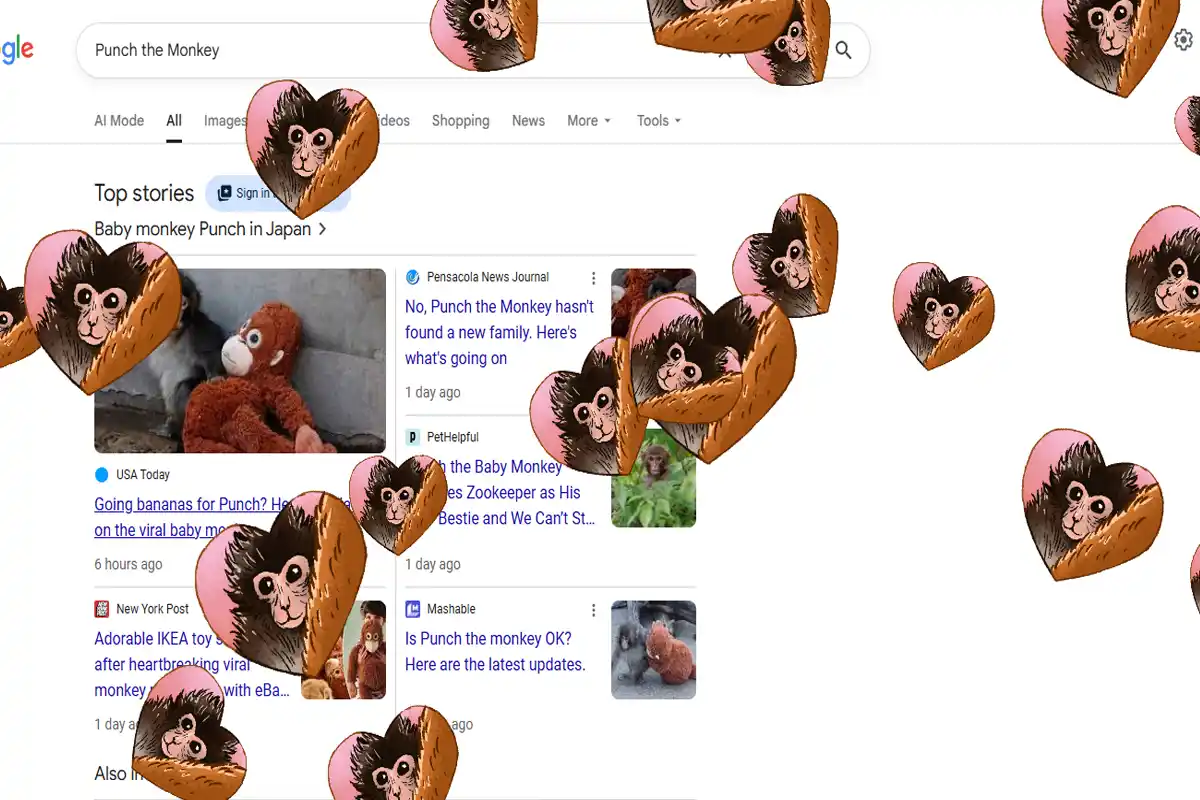
On February 26, 2026, many users noticed something unusual. When they searched “Punch the Monkey” on Google, animated hearts began raining down their screens.
The sweet surprise is a tribute to a baby monkey who won hearts across the world.
Here’s the full story behind the trend.
Who Is Punch the Monkey?
Punch, also known as Panchi-kun, is a Japanese macaque born in July 2025 at Ichikawa City Zoo in Japan.
Soon after birth, his mother abandoned him. Zoo caretakers stepped in and provided round-the-clock care.
To comfort him, staff gave him a small orangutan plush toy.
Punch began clinging to the toy constantly. He hugged it, carried it, and even slept with it.
The images quickly went viral.
How Did Punch Go Viral?
Photos and videos of the tiny macaque holding his stuffed companion spread rapidly on Instagram and other platforms.
Viewers were deeply moved.
The hashtag #keepgoingPunch started trending as people followed his recovery and growth.
For many, the plush toy became a symbol of innocence, comfort, and emotional resilience.
Why Does Google Show the Heart Animation?
When users type “Punch the Monkey” into Google, animated hearts fall across the screen.
The feature celebrates the emotional connection people felt with Punch’s story.
Google often creates small interactive animations for viral and heartwarming moments. This time, it chose to honor the baby macaque.
The animation has sparked even more curiosity, leading thousands to search for Punch’s journey.
How Is Punch Doing Now?
As of February 2026, updates from Ichikawa City Zoo confirm positive progress.
Punch has gradually integrated with other macaques in his troop.
He is becoming more independent and does not rely entirely on the plush toy anymore.
Caretakers say he is healthy and adapting well.
Why This Story Matters
Punch’s story touched millions because it showed vulnerability and recovery.
Even in the animal world, companionship plays a powerful role.
The raining hearts animation reflects how deeply people connected with one small monkey’s journey.
Sometimes, the simplest stories leave the biggest impact.


