

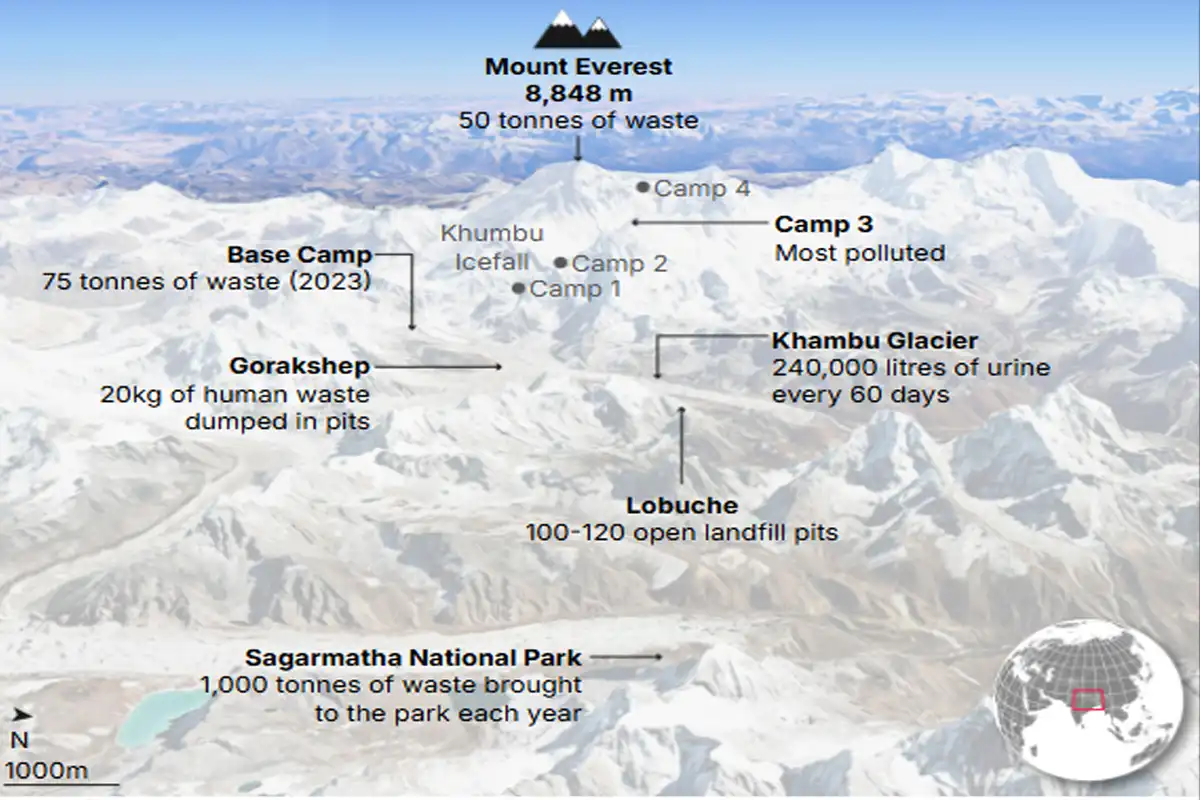
A program to clean Mount Everest has been canceled. It ran for 11 years. The goal was to make climbers bring trash down from the mountain. But many climbers found ways to cheat.
The program started in 2014. Climbers had to pay a $4,000 deposit. They would get the money back only if they brought down at least 18 pounds (8 kilograms) of garbage.
The plan aimed to clear waste left by earlier climbers. This waste includes empty oxygen tanks, old tents, food containers, and human waste.
However, the problem did not go away. Climbers found a loophole. They collected trash from lower camps instead of from higher up the mountain. Most waste is left at the higher, more difficult camps.
Tshering Sherpa works for the Sagarmatha Pollution Control Committee (SPCC). This group manages a checkpoint on Everest. He explained the issue to the BBC. He said climbers from high camps mostly bring back only oxygen bottles. They leave other items like tents, cans, and food boxes behind.
Tourism in the Sagarmatha National Park has grown fast. The number of visitors doubled between 2014 and 2017. These tourists help the local economy but also create a lot of trash.
Every year, photos show camps covered in litter. There are torn tents, abandoned gear, and human waste. No official count exists for the total trash on Everest. But a 2020 study estimated about 50 tonnes of solid waste has been left there over 60 years.
The Nepalese Army removed about 34 tonnes of waste in 2022. This was more than the 27.6 tonnes removed in 2021.
Under the old rules, most climbers got their deposit back. But they were still creating more waste than they carried down. The average climber produces about 12 kilograms of waste during their climb.
Another problem was a lack of monitoring. There were no officials watching climbers at the highest camps. They could leave trash without consequences.
Now, officials are starting a new rule. Climbers must pay a non-refundable $4,000 clean-up fee. This money will create a fund for mountain cleaning. It will also pay for a new checkpoint at Camp Two. Mountain rangers will be hired to monitor waste collection higher on the mountain.
Mingma Sherpa leads the Pasang Lhamu rural municipality. He told the BBC the local Sherpa community wanted this change for years. The old deposit system did not punish anyone for not bringing trash down. The new fee will ensure dedicated money for cleanup work.
