







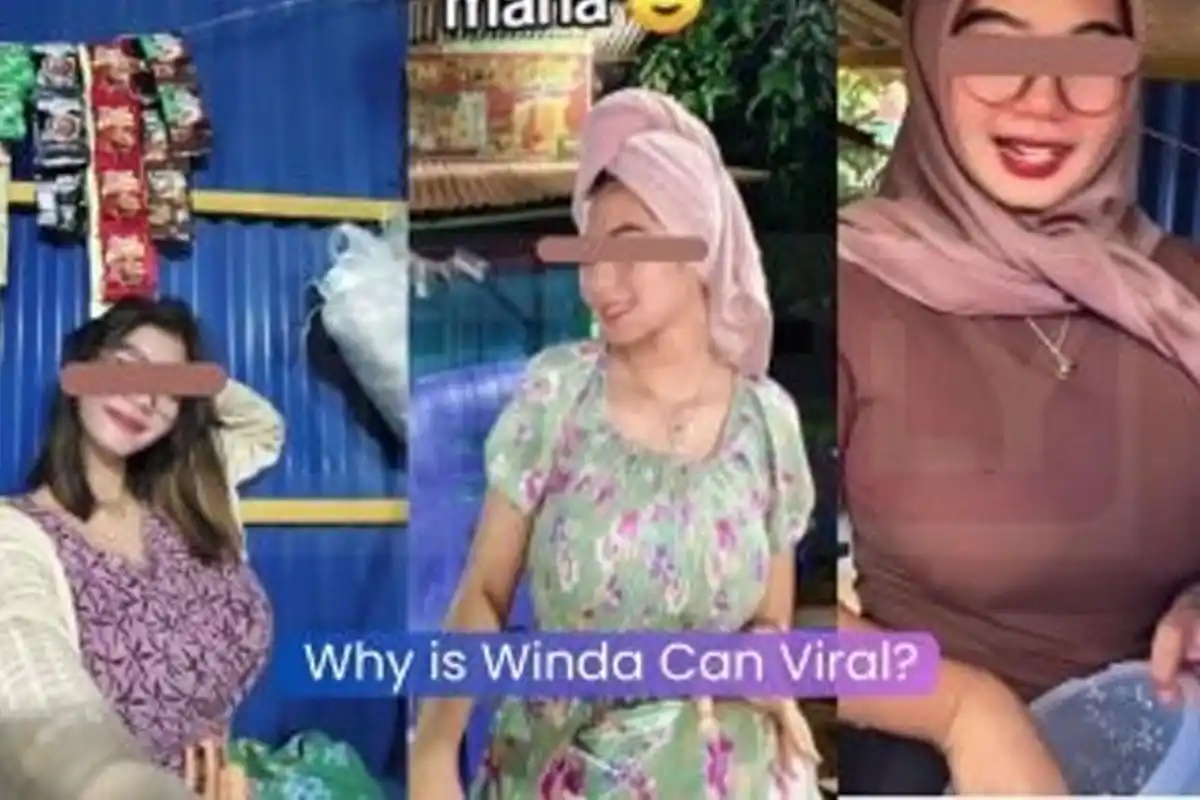
Indonesian social media users have been searching heavily for keywords linked to influencer and street vendor Winda Can, after claims of an alleged private video began circulating online. The trend, often referred to as the “Winda Can botol parfum viral video,” has triggered widespread curiosity, but cybersecurity experts warn that most links connected to the claim are dangerous clickbait.
Who Is Winda Can?
Winda Can, whose real name is reported as Winda Sari Safitri, is known online as a small-scale juice seller from Duren Sawit, East Jakarta. She gained popularity through short-form videos on TikTok and Instagram, where she shared daily routines from her drink stall.
Her content often highlighted polite behaviour and modest dressing, which helped her build a loyal following. Over time, she became a recognisable local internet personality.
Why Is Winda Can Trending Online?
The recent spike in searches began after social media posts claimed that a private video linked to Winda Can had been leaked. These claims were shared using sensational captions such as “botol parfum,” “penjual es viral,” and “full video link.”
However, no verified source has confirmed the authenticity of the alleged footage. There is also no official statement from Winda Can addressing the claims.
Shortly after the trend gained momentum, her social media accounts were reportedly set to private, further fuelling speculation.
Cybersecurity Experts Issue Warning
Digital safety experts say the viral trend is being used as a phishing tactic. Many links promising access to a “full video” redirect users to:
-
Fake login pages designed to steal social media credentials
-
Malicious websites that attempt automatic downloads
-
Scam pages that collect personal data
These methods follow a common bait-and-switch pattern, where sensational keywords are used to exploit public curiosity.
Experts strongly advise users not to click on unknown links, especially those shared through Telegram, Instagram comments, or private messages.
Rising Concern Over Online Misinformation
This incident highlights a growing issue in Southeast Asia, where unverified viral claims spread faster than factual information. Similar trends in recent months have involved fabricated videos, AI-generated content, and misleading thumbnails used to manipulate users.
Authorities and digital rights groups continue to urge users to verify information through credible news platforms and avoid sharing unconfirmed content.
Fact Check Summary
-
❌ No verified evidence confirms the alleged video
-
❌ No official statement confirming authenticity
-
⚠️ Multiple reported scam and phishing links
-
✅ Confirmed increase in misleading clickbait posts
The viral claims remain unverified, and the primary risk lies in online scams rather than confirmed leaked content.
DISCLAIMER: This article is strictly for informational and educational purposes to raise awareness about the topic discussed. Daily Trend Mirror does not host, distribute, or provide links to sexually explicit content, leaked videos, or pirated material. Any search terms or keywords mentioned are used solely to explain the viral trend and highlight the associated online risks. We strongly condemn the circulation of non-consensual intimate imagery (NCII) and advise readers to refrain from searching for or sharing such content, as doing so may result in serious legal consequences.


